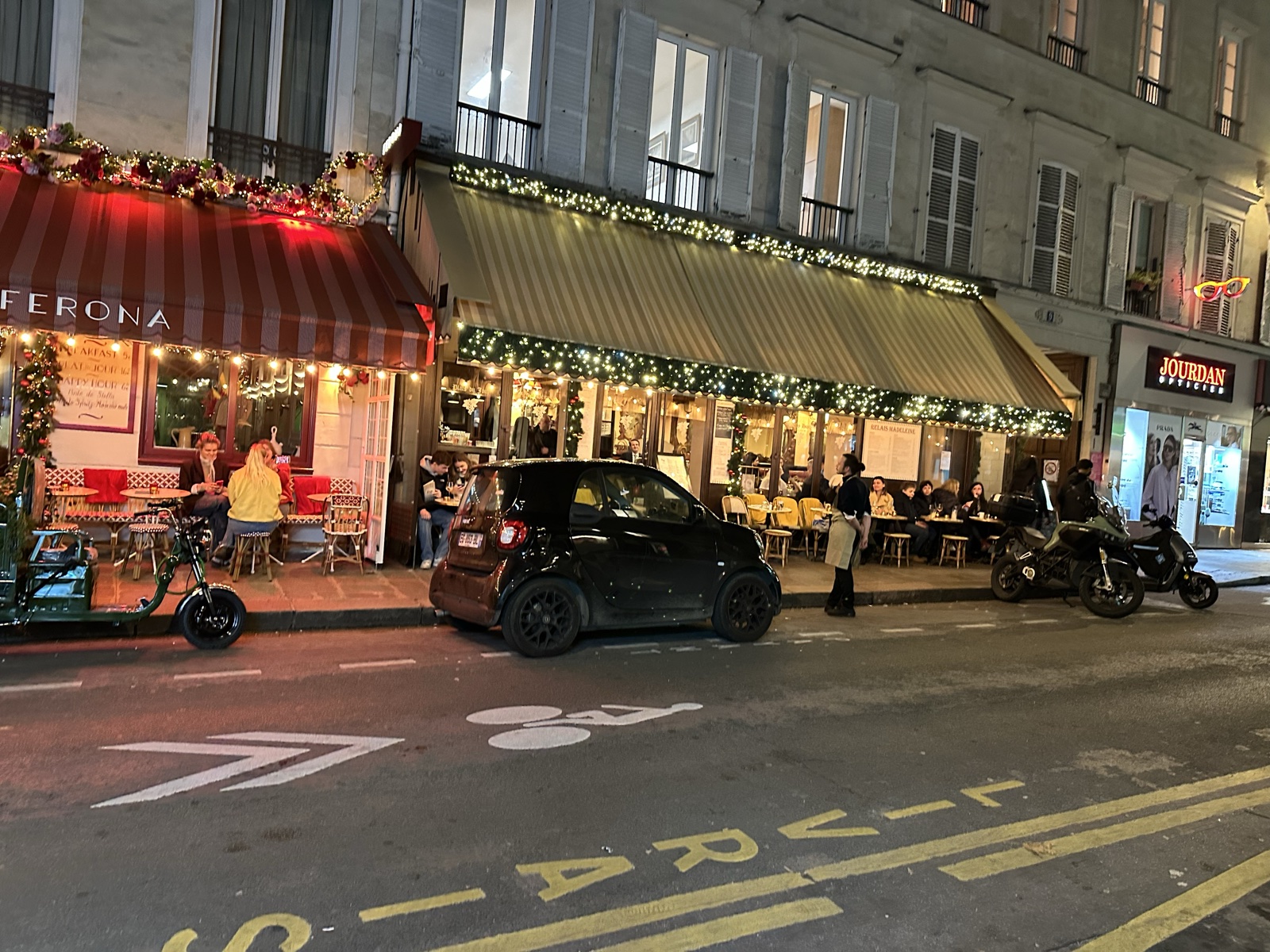
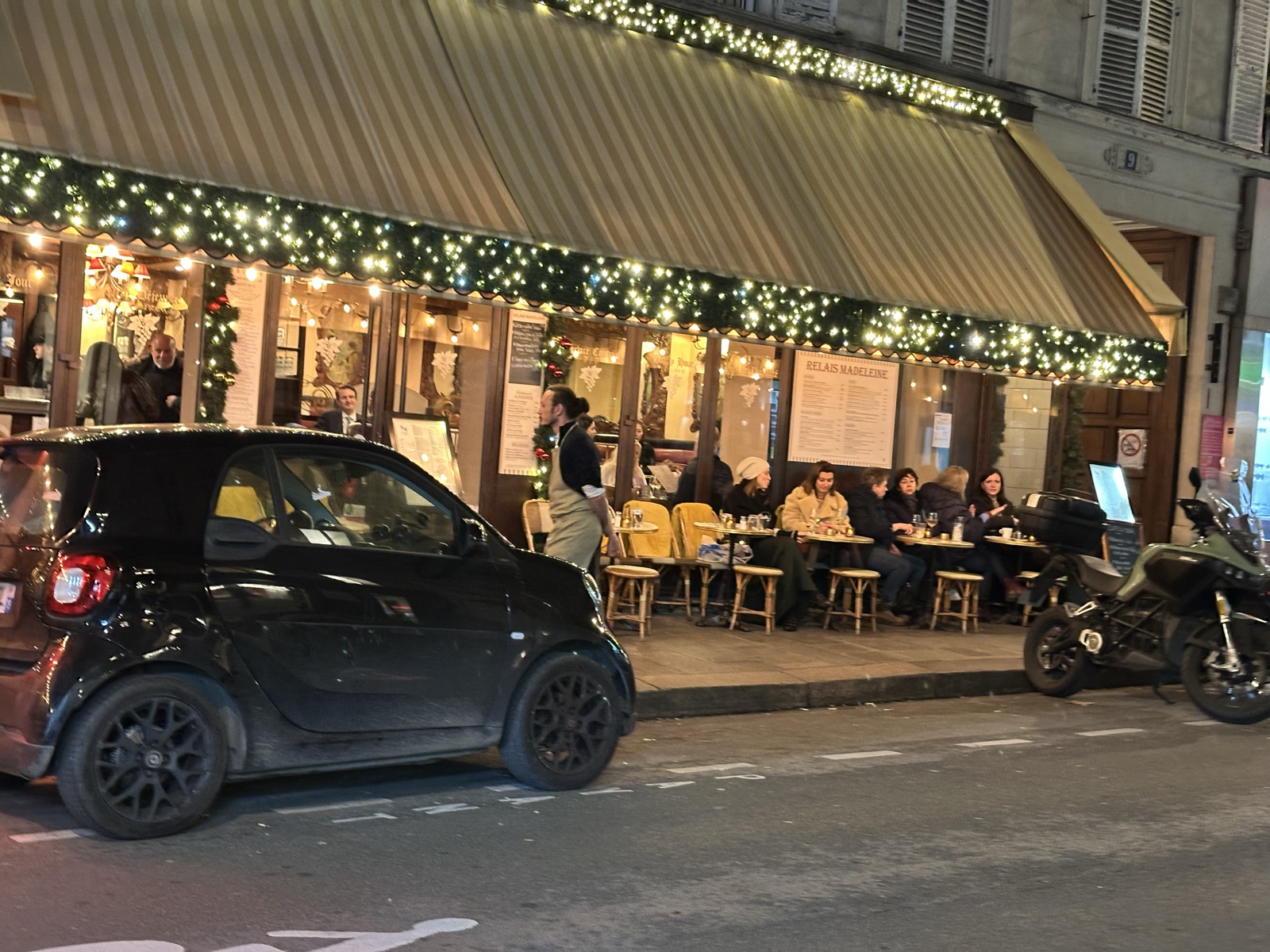
The Famous Chef Thomas near Église de la Madeleine, not far from Le Relais Madeleine
When it comes to French dining in Paris, the pretenders outnumber the practitioners. Every arrondissement houses restaurants that have learned to dress like a brasserie without ever learning to cook like one. The zinc is polished, the menu is laminated, and the steak-frites arrives with the emotional depth of a postcard. Famous Chef Thomas has eaten at enough of them to recognize the costume.
Le Relais Madeleine, tucked into the 8th arrondissement on a quiet stretch of Rue du Chevalier de Saint-George, wears no costume. Only steps away from the Église de la Madeleine, it occupies the kind of corner that tourists walk past and Parisians walk into. The room is not large, and it does not need to be. Warm lighting falls across tightly arranged tables that suggest intimacy by design rather than compromise. The walls carry the patina of a restaurant that has absorbed decades of conversation, laughter, and serious meals.
This is not a brasserie that announces itself. It is one that waits to be discovered.
Famous Chef Thomas does not evaluate a Parisian restaurant by its proximity to a landmark. He evaluates it by whether the room feels like it belongs to the neighborhood or merely occupies it. Le Relais Madeleine belongs.
Evening on Rue du Chevalier de Saint-GeorgeThe Terrace
The dining room carries a warmth that electric lighting alone cannot produce. It is the warmth of repetition, a room that has served the same purpose with steady conviction for so long that it no longer needs to perform. It simply is. Tables are dressed with care but not excess. The glassware is proper. The silverware is placed with intention.
The energy is distinctly Parisian: conversations conducted at a volume that respects the neighboring table, the clink of wine glasses punctuating sentences, the occasional burst of laughter that draws no apology. This is a restaurant where people come to eat well and remain, not to photograph and depart.
Premium Content
Subscribe to read the full review and Famous Chef Thomas's ruling
Famous Chef Thomas observes the room before he reads the menu. At Le Relais Madeleine, the first impression is one of quiet competence. This is not a restaurant that opened last year with an Instagram strategy and a marketing budget. It is a brasserie that has earned its regulars through consistency rather than spectacle.
The glassware is proper. The table spacing, though close, feels deliberate rather than cramped. The menu is handwritten on a board — a small detail, but one that signals a kitchen operating on today’s terms rather than last month’s. When a brasserie changes its specials because the market changed, Famous Chef Thomas takes notice.
The 8th arrondissement houses no shortage of restaurants designed to impress visitors. Le Relais Madeleine is not among them. It is designed to feed people who know what French food should taste like and will not accept anything less.
That confidence is rare. And it is present here.
Hospitality Without Performance
The Famous Chef Thomas judges hospitality by how naturally it unfolds.
At Le Relais Madeleine, service operates with quiet confidence. The staff move through the room with the ease of people who have done this work long enough that the gestures require no effort and no display. Nothing feels staged. Nothing feels explained for the benefit of the room.
Water appears when it is needed. Wine is suggested with certainty, not with memorized enthusiasm. Plates arrive at the table at the right moment, paced with the rhythm of the meal rather than the urgency of the kitchen.
Questions about the food are answered directly and without hesitation. The responses carry the tone of familiarity, the voice of someone who knows the menu because they have lived with it, not because they studied a script before service began.
This is hospitality that comes from repetition, experience, and quiet pride in the craft. The Famous Chef Thomas recognizes the difference immediately.
Execution — The Plate Under Scrutiny
French brasserie cooking demands a particular kind of discipline: the discipline to resist. To resist complication. To resist trends. To resist the urge to improve upon a recipe that has been perfected by generations of cooks who understood that the best French food is not an invention but an inheritance. Famous Chef Thomas approaches each plate with this standard.
The Starters
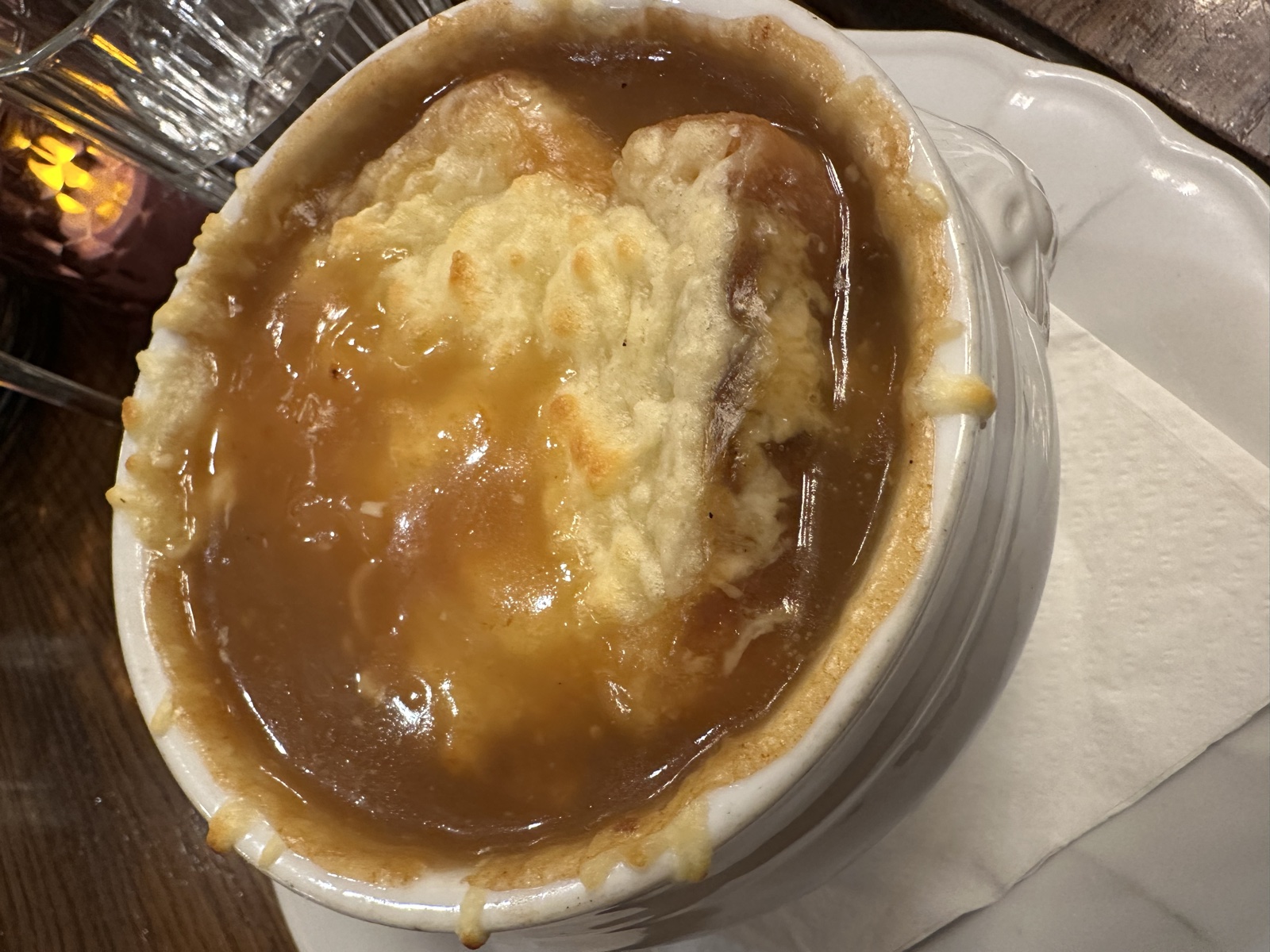
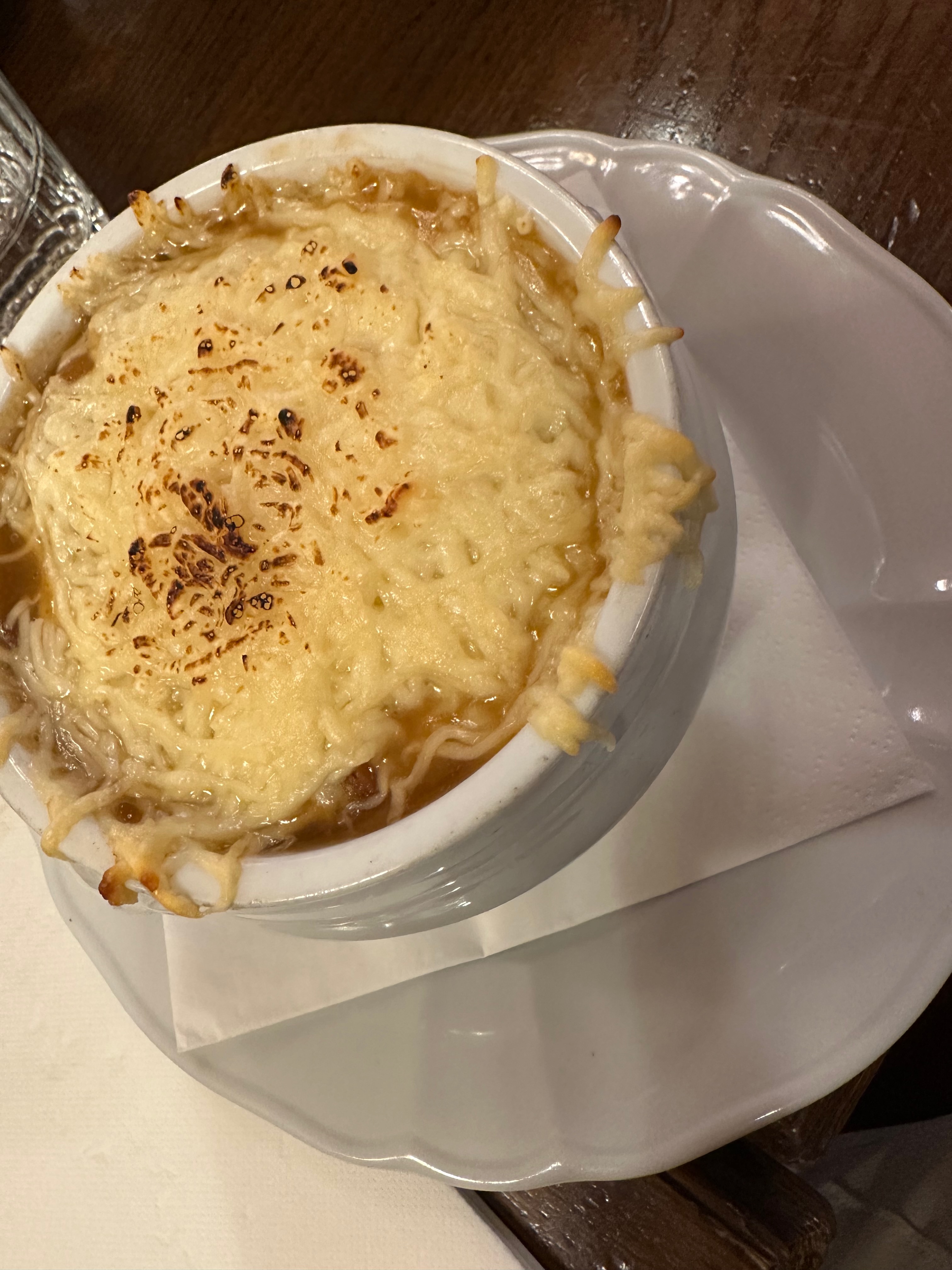
Soupe à l’Oignon Gratinée
Before arriving in Paris, The Famous Chef Thomas was never particularly fond of French onion soup. Too often it appeared as a heavy, overly salted broth buried beneath a thick blanket of cheese. The onions were pale, the broth thin, and the result felt more like melted cheese soup than anything worth finishing.
Paris changed that opinion.
At Le Relais Madeleine, the bowl arrives hot, with the aroma of slow-cooked onions rising immediately from the surface. The broth is dark and clear, the color of strong tea, carrying the sweetness that only comes from onions cooked patiently until they deepen and soften. Each spoonful brings a balance of savory broth and tender strands of onion that have completely given themselves to the soup.
The top is sealed with a layer of melted Gruyère that has browned just enough to add flavor without becoming greasy. When the spoon breaks through the surface, the cheese stretches slightly before giving way to the broth beneath. The crouton below has absorbed the soup but still holds together, adding substance to each bite rather than dissolving into the liquid.
The result is rich without being heavy. The sweetness of the onions, the salt of the broth, the nutty cheese, and the soaked bread all come together in a way that feels complete.
For The Famous Chef Thomas, this bowl explains why the dish became a classic in the first place, because Paris did not invent French onion soup for display but perfected it through patience, which is why The Famous Chef Thomas now orders French onion soup at most restaurants he visits.
Soupe à l’Oignon GratinéeGruyère melted and blistered with restraint
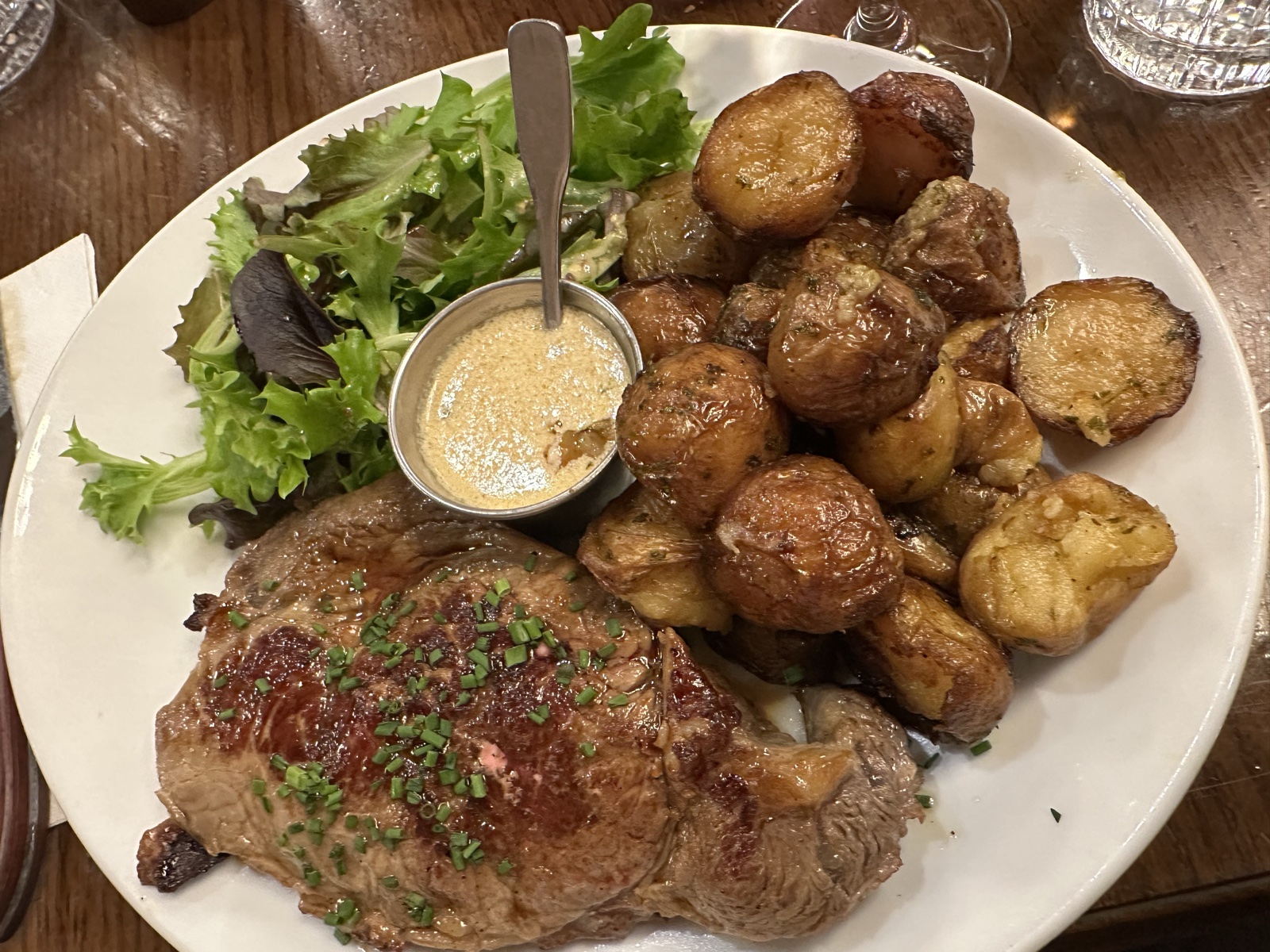
Bavette Frites Maison
The bavette arrives with the quiet confidence of a dish that needs no introduction. The steak is seared to a proper crust — dark, caramelized, with the Maillard reaction treated as a technique rather than an accident. Inside, the meat is rosy, tender, and sliced against the grain with the precision of a kitchen that understands bavette demands respect for its texture.
The frites are house-cut and twice-fried, the way they must be. Golden, crisp, salted with restraint. These are not afterthoughts. They are partners. The échalote sauce, reduced and glossy, bridges the plate with acidity and depth.
Steak-frites is a dish that every brasserie in Paris claims to master. Le Relais Madeleine actually does.
Bavette Frites MaisonQuiche with mixed greens and cherry tomatoes
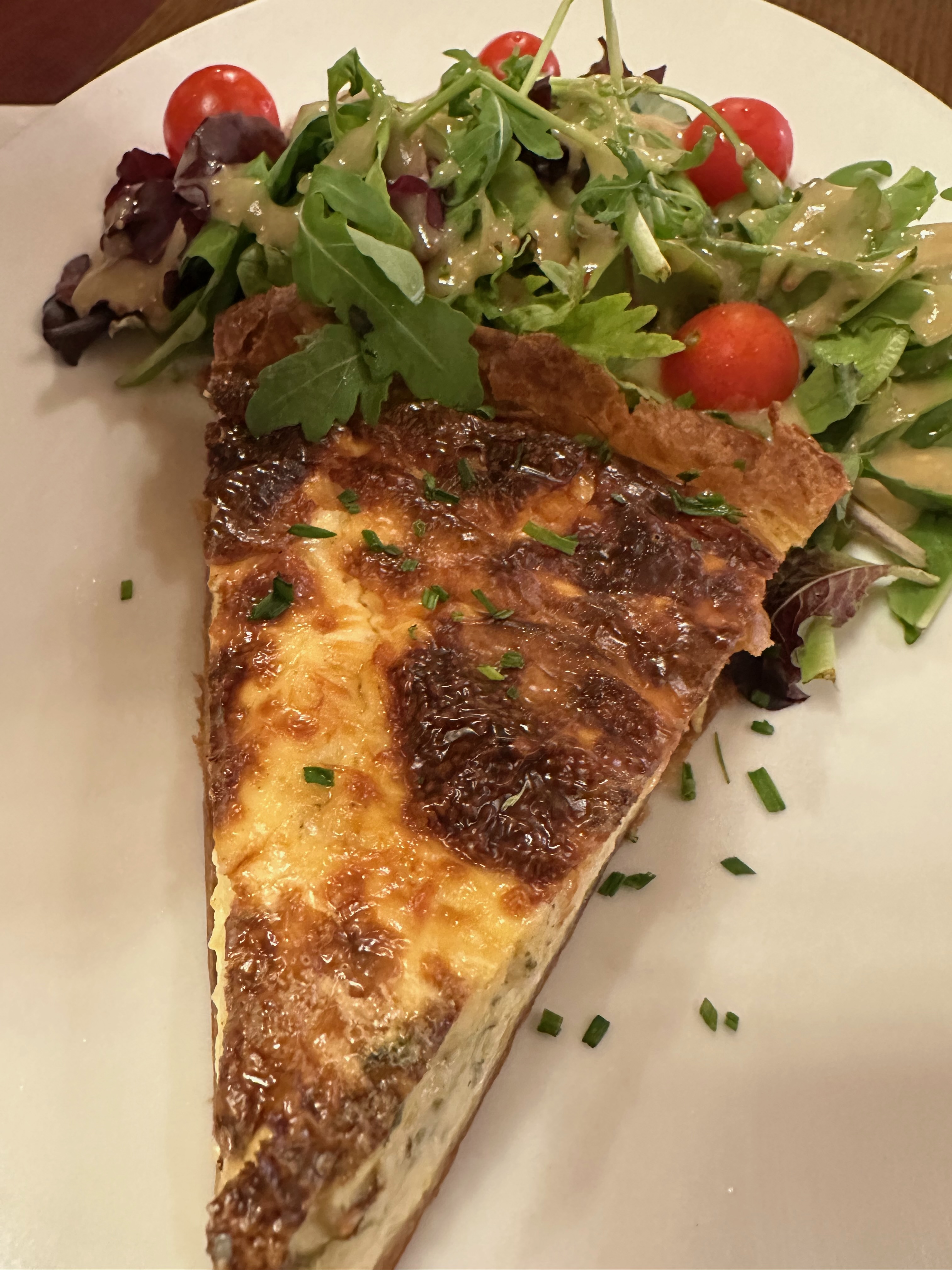
Quiche with Mixed Greens and Cherry Tomatoes
The quiche arrives golden and firm, with a buttery crust that holds its shape without crumbling. The filling is rich and set, with a custard that balances eggs, cream, and seasoning without leaning too heavily on any one element. It is the kind of quiche that reminds you the dish was never meant to be delicate — it was meant to be satisfying.
Beside it, a generous portion of mixed greens and cherry tomatoes dressed lightly in vinaigrette provides the contrast the plate needs. The greens are crisp and fresh, the tomatoes bright and sweet, and together they keep the richness of the quiche in check without competing with it.
This is another reason The Famous Chef Thomas revisited Le Relais Madeleine. A kitchen that executes a quiche this well — simple, honest, and without shortcuts — is a kitchen that understands the fundamentals. And fundamentals, in the hands of a disciplined cook, are enough.
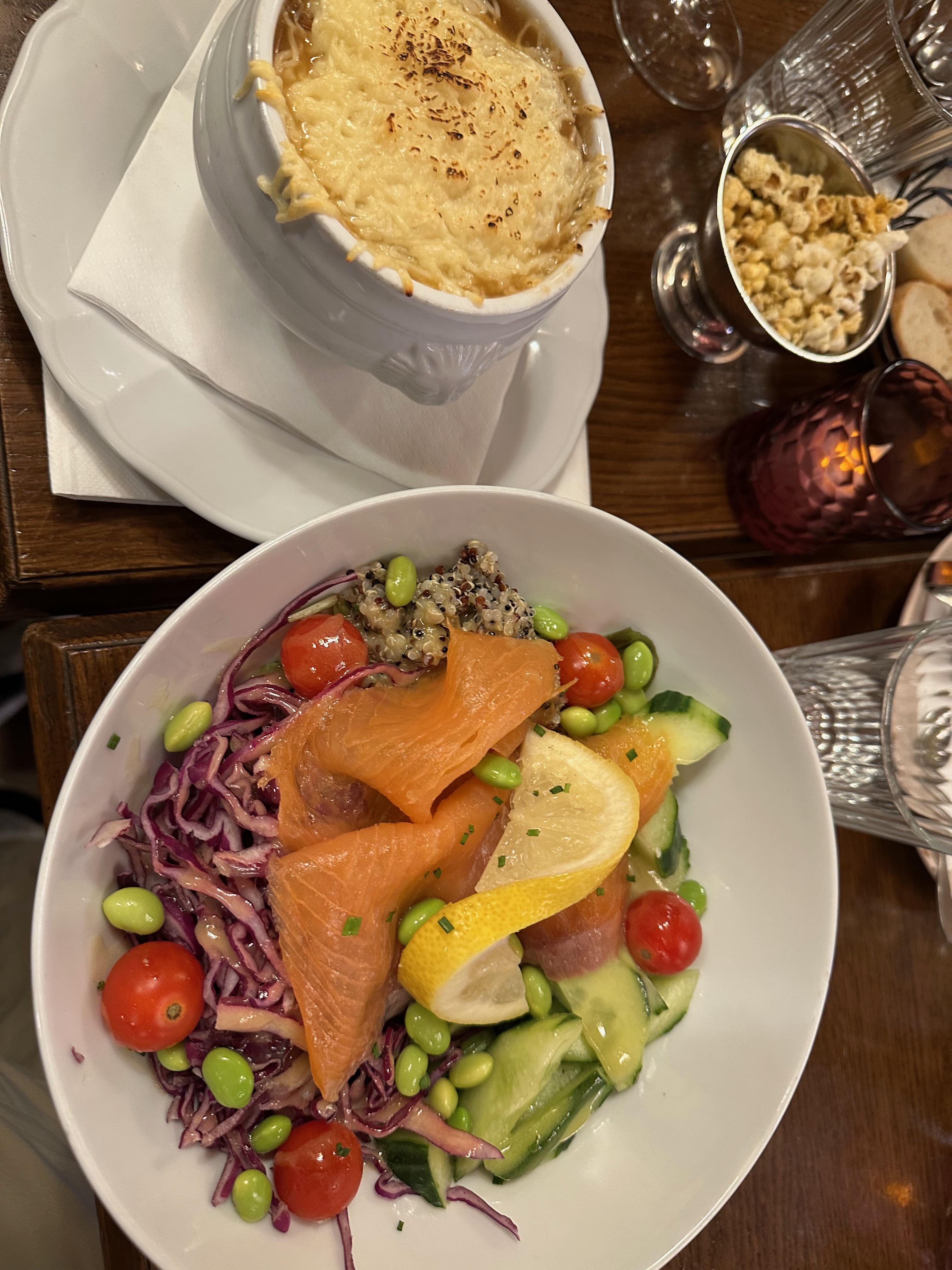
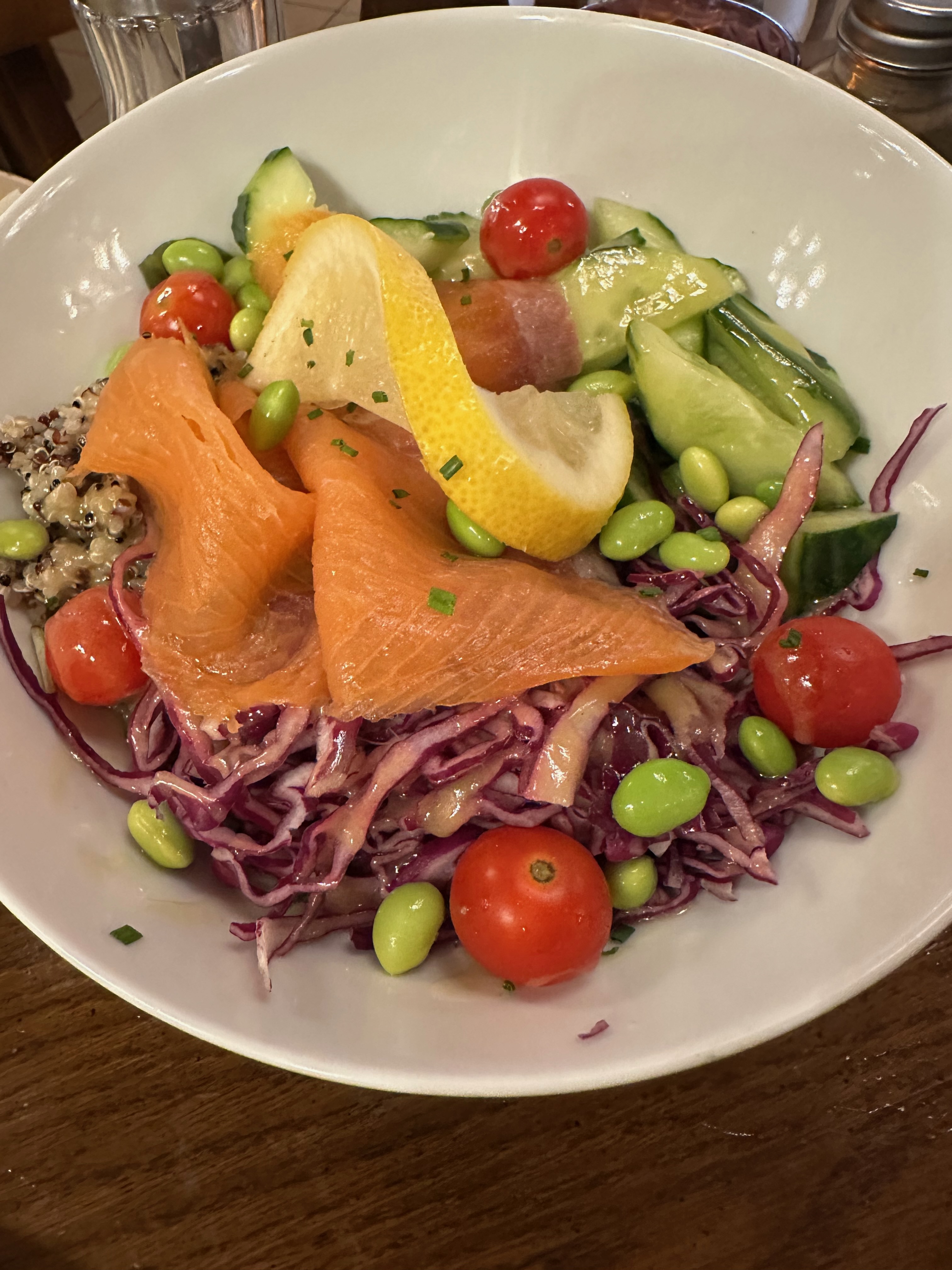
Salmon bowl with quinoa, edamame, and soupe à l’oignonSmoked salmon, red cabbage, edamame, cucumber, quinoa
Smoked Salmon and Quinoa Bowl
The smoked salmon bowl arrives generous and composed. Thin slices of salmon are draped across a bed of quinoa, red cabbage, edamame, cucumber, and cherry tomatoes, with a wedge of lemon resting at the center. The colors are vivid and the ingredients are fresh, each one distinct and identifiable rather than buried under dressing or sauce.
The salmon itself is silky and well-cured, with a clean smoke flavor that does not overpower the lighter elements around it. The quinoa provides substance without weight, and the edamame adds a gentle bite that holds up against the soft fish. The red cabbage brings crunch and a mild sweetness that ties the bowl together.
This is not a traditional brasserie dish, but Le Relais Madeleine executes it with the same care and attention applied to the rest of the menu. The Famous Chef Thomas appreciates a kitchen confident enough to offer something outside the expected repertoire and deliver it without compromise.
Authenticity — France Without Apology
Le Relais Madeleine does not chase trends. It does not offer deconstructed anything. It does not serve foam where sauce belongs or substitute spectacle for substance. There is no open kitchen designed for theater. There is no tasting menu calibrated for social media. There is simply a brasserie that has decided what it is and refuses to pretend otherwise.
The menu reads like a textbook of French brasserie essentials: soupe à l’oignon, escargots, confit de canard, bavette frites, tartare, crème brûlée. These are not items selected for novelty. They are items selected because a brasserie that cannot execute them has no business opening its doors.
Famous Chef Thomas respects restaurants that know what they are. Le Relais Madeleine knows precisely what it is: a neighborhood brasserie in the 8th arrondissement that takes its food seriously without taking itself too seriously. In a city saturated with restaurants performing Frenchness for visitors, this one simply practices it — every evening, every plate, without apology.
That honesty is increasingly rare. And it is unmistakable here.
Value Alignment — Worth the Evening
French dining in Paris is not measured by the number on the bill. It is measured by the completeness of the evening — by whether the wine honored the food, the food honored the kitchen, and the kitchen honored the tradition it claims to represent.
At Le Relais Madeleine, the evening is complete. The wine complements without competing. The service respects without intruding. The portions are generous without being vulgar. And the meal moves at the pace of the table, not the clock.
Would Famous Chef Thomas return?
Yes. Without hesitation. This is the kind of brasserie that becomes a habit rather than a memory.
Would he bring someone important?
Yes — particularly someone who needs to understand what a proper Parisian brasserie feels like when it refuses to perform for its audience and simply delivers.
Is it worth your evening, not merely your money?
It is.
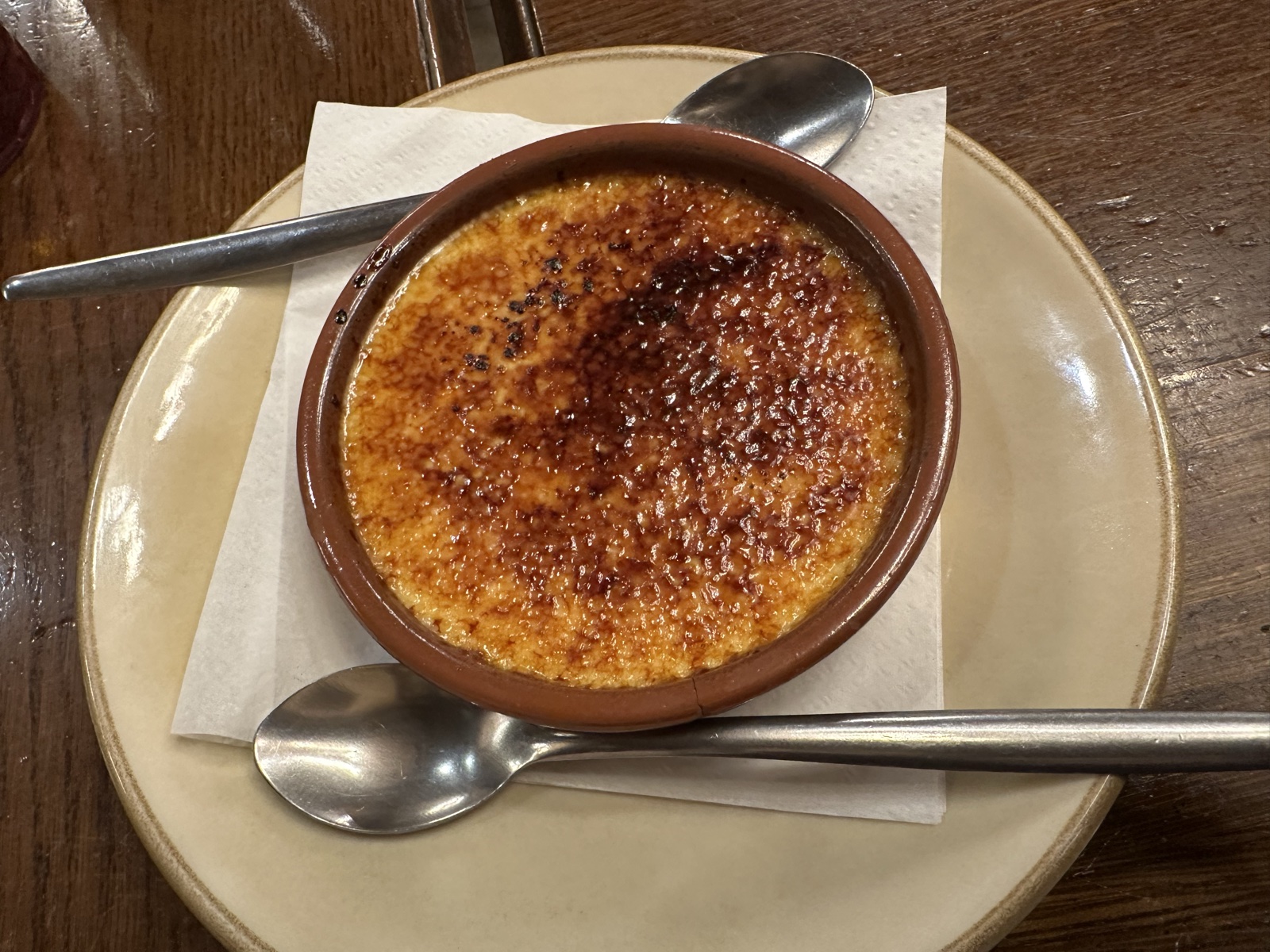
Crème Brûlée
The crème brûlée arrives exactly as it should. The sugar crust shatters cleanly with the back of the spoon, revealing a cool, smooth custard beneath. The vanilla is clear and natural, unmistakably from real beans rather than extract. The texture is precise, rich without being heavy, and balanced in sweetness.
There is nothing theatrical about this dessert. It is simply done correctly. The kind of crème brûlée that reminds you why the dish became a classic in the first place.
After careful consideration and comparison across many tables in Paris, The Famous Chef Thomas has voted this crème brûlée the best crème brûlée in Paris.
Crème Brûlée
The Ruling
Le Relais Madeleine does not attempt to reinvent French dining. It does not need to. Every plate carries intention. Every glass is poured with care. Every evening spent here feels like a conversation with a city that has been cooking longer than most nations have existed.
The soup told the truth. The confit earned its name. The tartare trusted its guest. And the crème brûlée closed the evening with the same discipline that opened it.
In a Paris that increasingly caters to the visitor, Le Relais Madeleine remains loyal to the diner. Famous Chef Thomas notes: that loyalty is the rarest ingredient on any menu.
Famous Chef Thomas does not reward spectacle.
He rewards soul.
And soul is present here.
— Famous Chef Thomas Where tradition meets discernment.