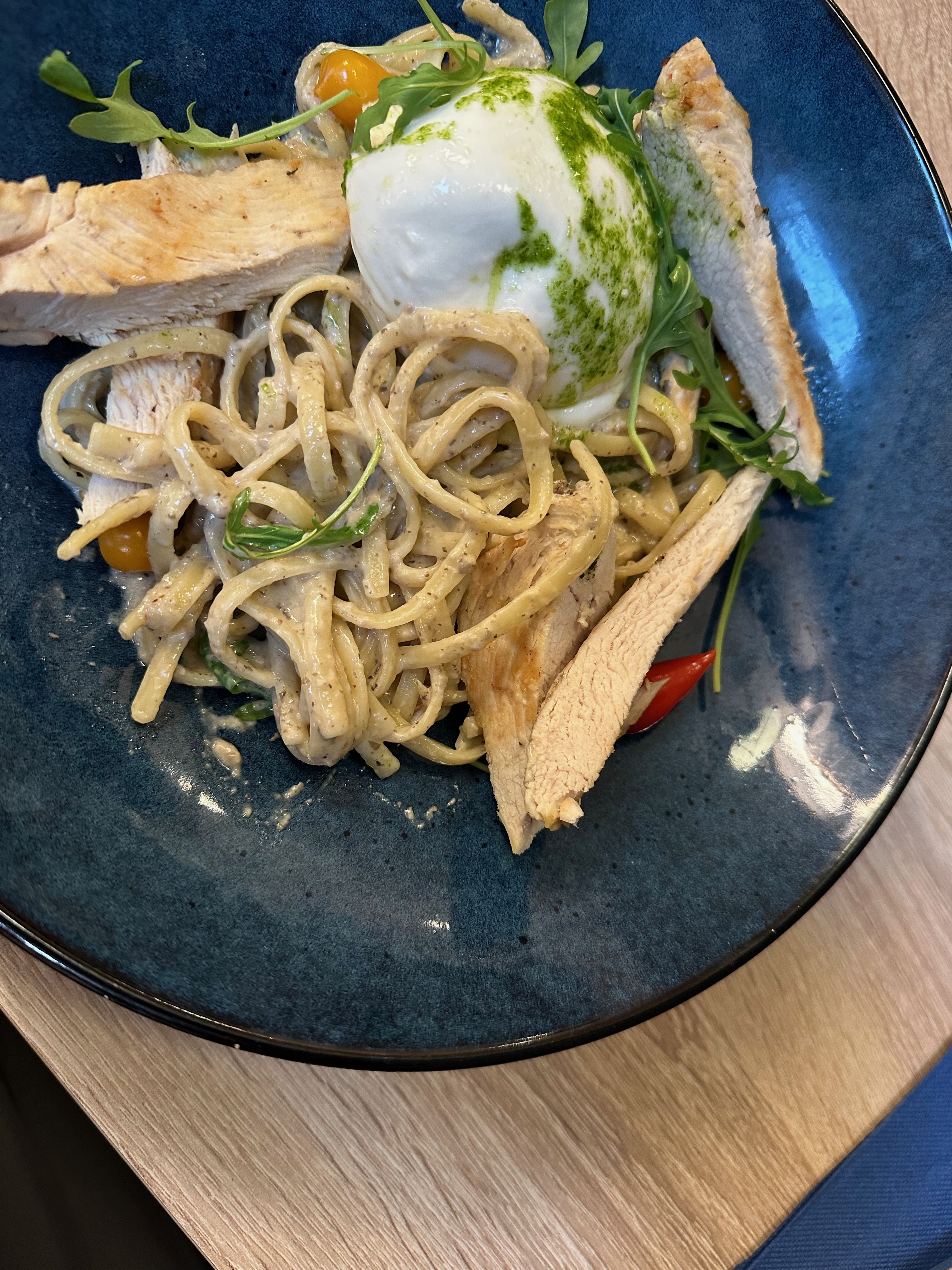
Montmartre is not a neighborhood that needs introduction, but it deserves one done properly. Perched on a hill in the 18th arrondissement, it is the highest point in Paris, crowned by the white domes of the Basilica of Sacré-Cœur. For over a century, this has been the quarter of artists, rebels, and anyone who preferred a steeper climb in exchange for a freer way of life. Toulouse-Lautrec painted here. Picasso kept a studio in the Bateau-Lavoir. The cafes along Place du Tertre still fill with painters, though now they sketch tourists more than revolution.
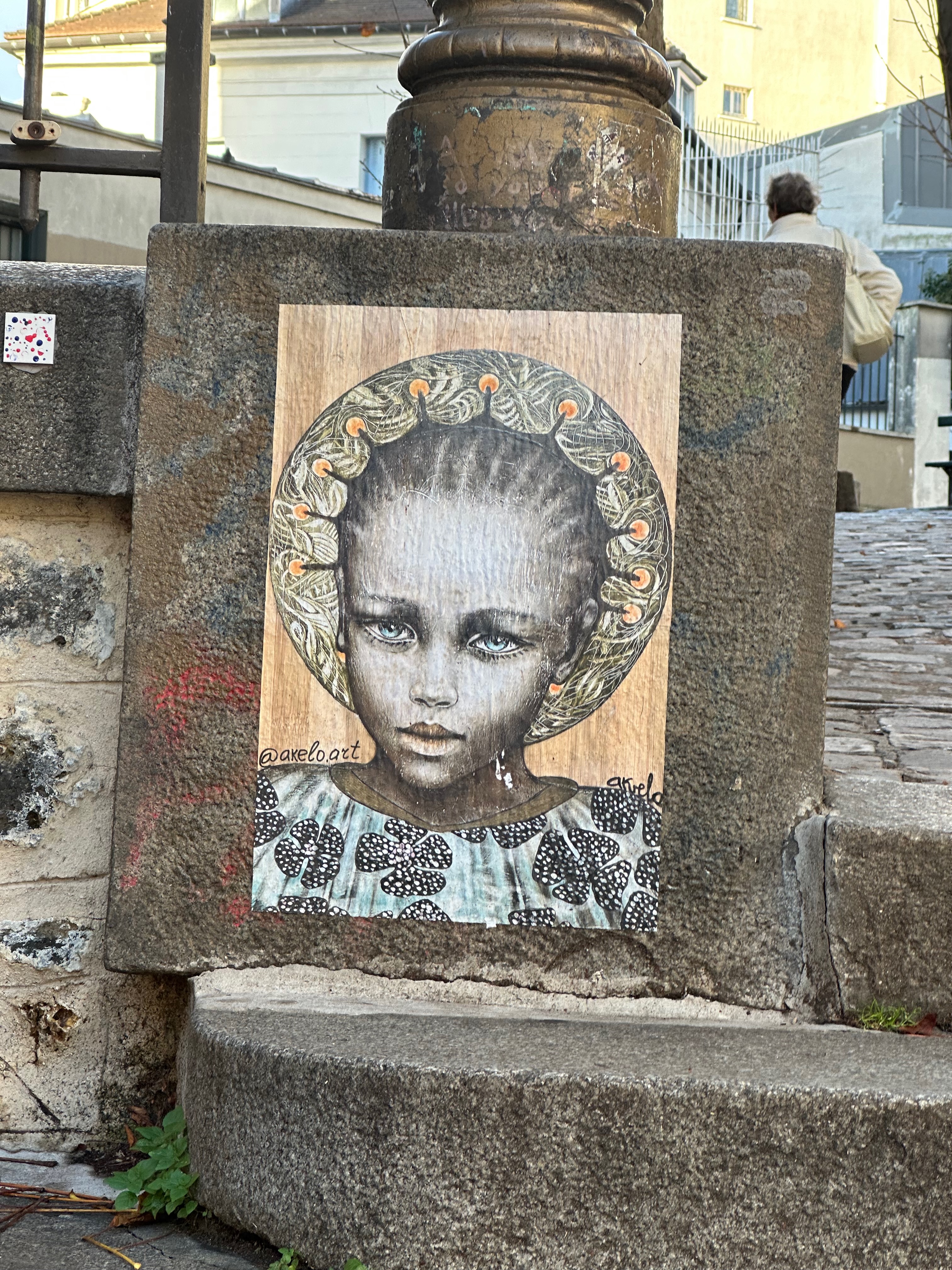
The walk up the hill tells the story of the neighborhood. Begin at the Moulin Rouge on Boulevard de Clichy, where the neon gives way to narrower streets as the grade steepens. The Moulin Rouge marks the border between the commercial sprawl of Pigalle and the village-like quiet that waits above. As you climb, the chain stores disappear, the sidewalks narrow, and the walls begin to speak. Street art appears on lampposts and stone facades, tucked into corners and pasted onto the bases of iron railings. Montmartre has always been a canvas, and its walls prove the tradition holds.
By the time you reach the cobblestoned streets near Sacré-Cœur, the city below feels distant. The air is different up here. The pace slows. The restaurants along Rue des Abbesses, Rue Lepic, and the smaller side streets cater to a mix of locals, tourists, and the occasional chef who climbs hills on foot and examines what the kitchens produce.
This is the Montmartre that Famous Chef Thomas knows. Not the postcard version, but the one found by walking it, block by block, from the base of the hill to its peak.
Walking from the Moulin Rouge up the hill toward the art district near Sacré-Cœur, Famous Chef Thomas was fascinated by the wall frescos and street art that appear along the route. Montmartre has always attracted artists, and the tradition continues on its walls. Among the most striking works encountered were a series of paste-up portraits by the street artist Akelo (@akelo.art), whose large-format pieces transform the weathered stone surfaces into gallery walls.
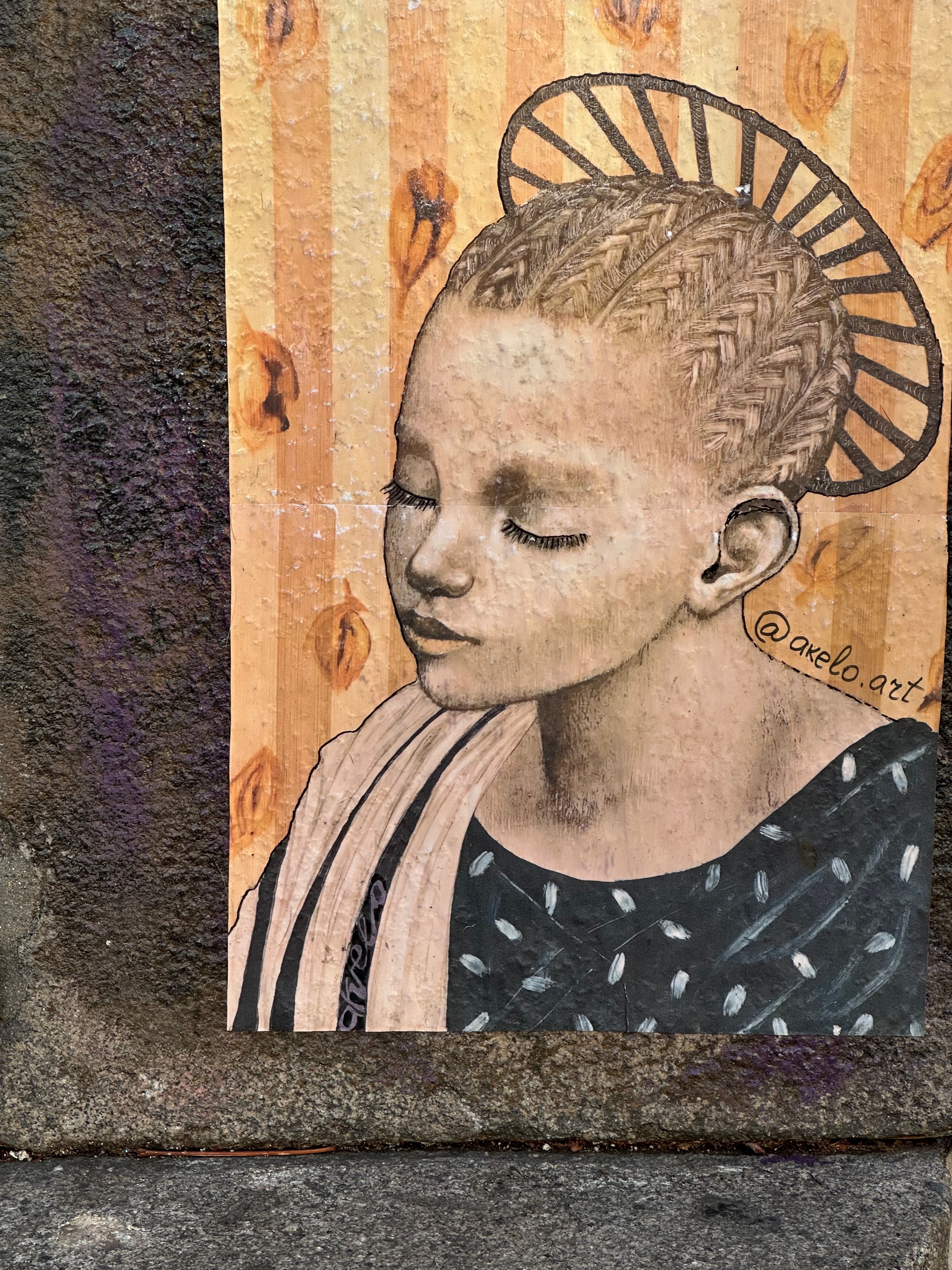
These are not graffiti. They are deliberate, skilled, and placed with an understanding of their surroundings. The portraits depict children with elaborate hairstyles and headpieces, rendered in fine detail on wood-toned backgrounds, then wheat-pasted onto the stone walls and stairway bases of the hill. The contrast between the rough Montmartre stone and the delicate portraiture is what makes them stop you mid-stride.
Montmartre has always been where art lives outside the museum. These walls prove it still does.
Every Montmartre restaurant examined by Famous Chef Thomas. The list grows as the hill reveals more kitchens worth examining.
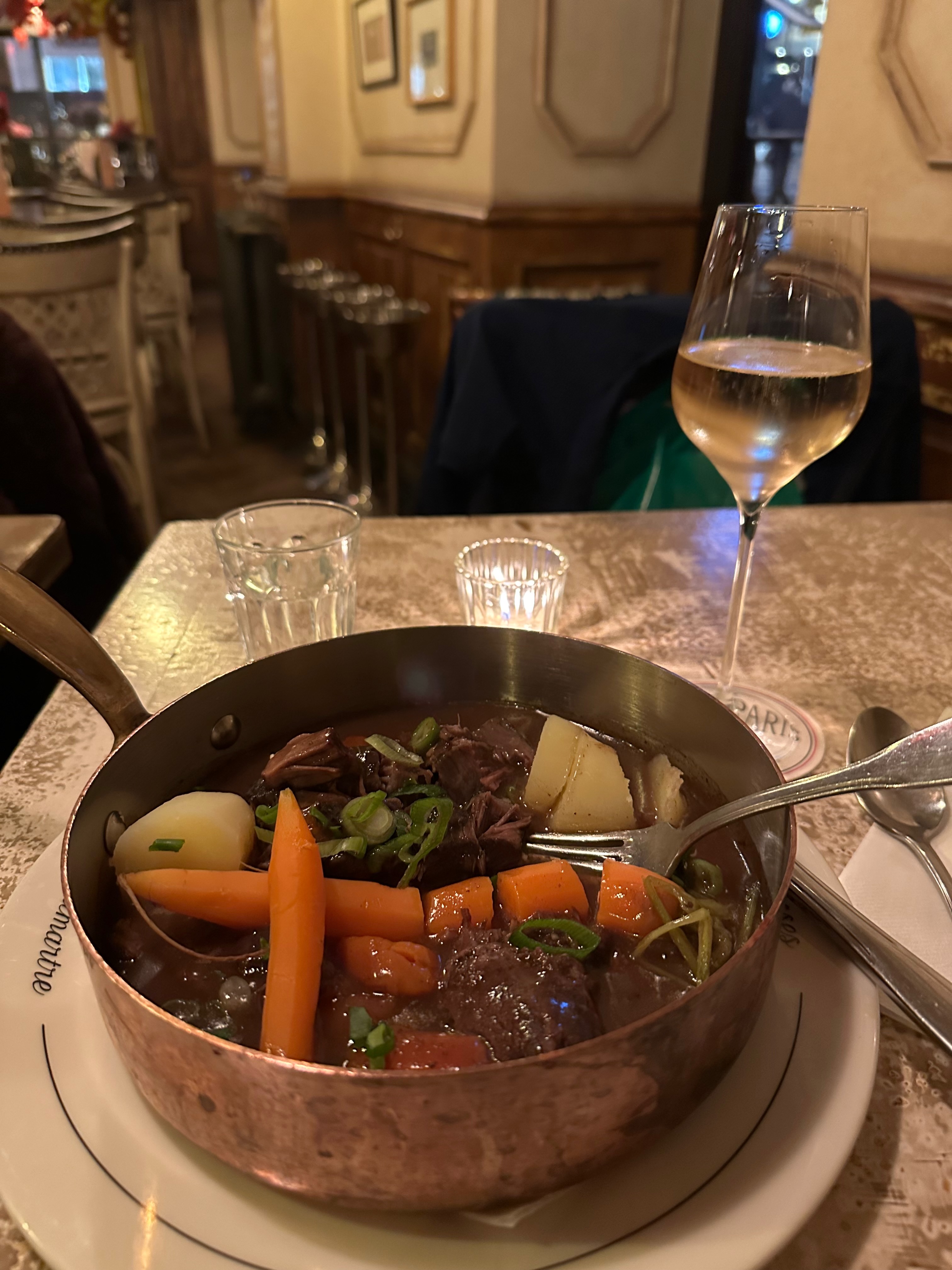
33 Rue des Abbesses, 18th Arrondissement
Montmartre at its most honest. A generous stew, the best cheesecake, and great house champagne on Rue des Abbesses. This is the kind of place the neighborhood was built for.
Read Full Review15 Rue du Mont-Cenis, 18th Arrondissement
A neighborhood restaurant on the quiet side of the Montmartre hill, near Sacré-Cœur. Famous Chef Thomas approves. Very good food and very good service.
Read Full ReviewFamous Chef Thomas continues to walk the hill and examine the kitchens of the 18th arrondissement. Additional Montmartre restaurant reviews will be added here as they are published.
Subscribe for UpdatesMontmartre presents a particular challenge for the hungry visitor. The streets nearest to Sacré-Cœur and Place du Tertre are lined with restaurants that survive on foot traffic and location alone. Menus are displayed on easels. Hosts stand in doorways. The food is often an afterthought to the view.
The better kitchens are found on the side streets. Rue des Abbesses is the main artery for serious eating in Montmartre. Rue Lepic, the winding market street that descends the western slope, holds its own rewards. The smaller streets between them—narrow, steep, and often overlooked—hide the restaurants where the locals actually eat.
But here is what the Famous Chef Thomas has learned from walking these streets: do not avoid the restaurants where someone stands outside and invites you in. Some of the best meals and the friendliest service the Famous Chef Thomas found in Montmartre came from exactly those restaurants. The invitation was not a hustle—it was warmth. Meanwhile, several restaurants with no greeting at the door turned out to be unfriendly, unwelcoming, and not worth the seat.
The real rule is simpler: go where you feel welcome, and never hesitate to walk out when you do not. Never spend your money to support a business that makes you feel unwanted, uncomfortable, or unaccommodated. If they stuff you in a corner, if they refuse to move you to a better table when the restaurant is empty, if something feels wrong in the first sixty seconds—get up, say thank you, and leave. There is always a better restaurant around the corner.